
Profitable Social Media Lead Generation Strategies for Home Service Contractors
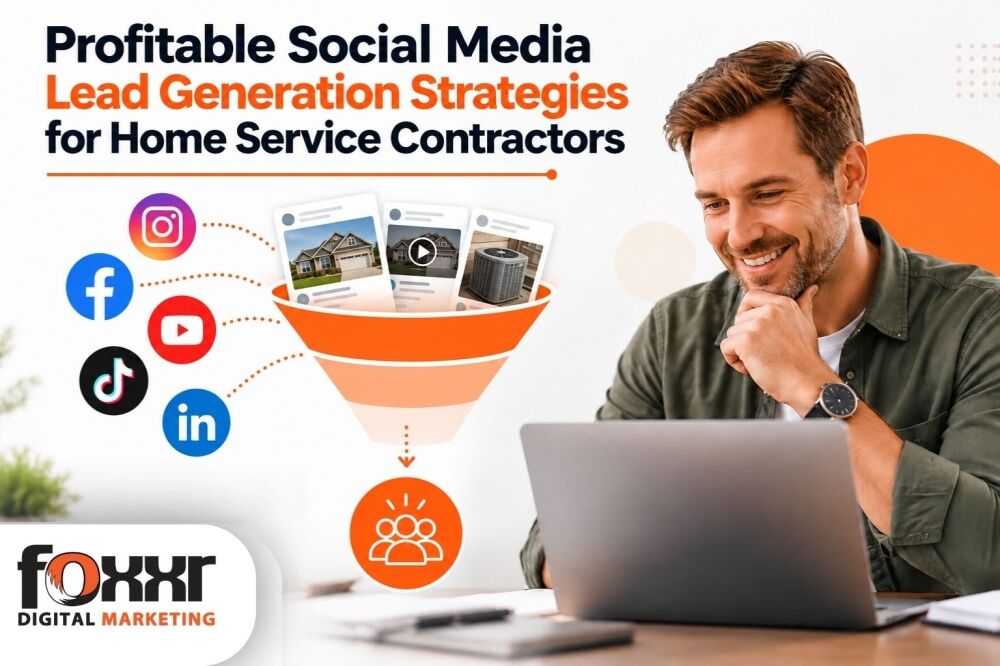
The most effective social media lead generation strategies for home service contractors involve running four kinds of media together: paid, earned, shared, and owned. Marketers call this mix the PESO model, short for Paid, Earned, Shared, and Owned, an idea Gini Dietrich introduced in 2014. Once those channels get homeowners calling, how quickly and how well your team answers decides how many of those callers end up hiring you.
Whether you run your own marketing or work with a digital marketing agency, this guide walks you through each type of media. You’ll also see how many junk leads to expect in your trade and how to budget for and measure what’s working.
What Social Media Does for a Home Service Business
Each part of the PESO model brings your business a different kind of reach:
- Paid: Your Facebook and Instagram ads, plus Local Services Ads.
- Earned: Reviews, neighborhood referrals, and mentions from local creators.
- Shared: Your organic social posts, replies in local groups, and Nextdoor answers.
- Owned: Your website, service pages, and project galleries.
Running these channels together works better than relying on one. Each channel reaches potential customers at a different stage.
Along the way, the reviews, posts, and service pages they find back up the ad that first caught their attention. Over time, that combination brings in more leads, and more high-quality leads, than any single channel can.

How Shared Media and Paid Media Reach Homeowners
Shared and paid media reach different people, which affects where your budget should go. Social media algorithms favor accounts a user has already interacted with, so your organic posts mostly reach past customers and the neighbors who follow you. Paid media is what carries your name to homeowners who haven’t heard of you yet.
The audience is there, too: Meta reported an average of 3.6 billion daily active people across Facebook, Instagram, WhatsApp, and Messenger in June 2026. Targeted ads let you focus on the small slice of those active users who live in your service area.
Your organic reach is limited by your current follower count, so new customer growth has to come from the paid side. That’s why you need both: organic content protects the revenue in your existing customer list, and paid ads add new names to it.
Social Signals and AI Search Visibility
The PESO model gives you a strong foundation, and connecting your owned media with social signals takes it further in today’s search results.
Social signals show that your business is active and trusted locally, which is a core part of the Foxxr Generative Engine Optimization (GEO) Framework. With strong signals in place, contractors can earn more visibility in AI Overviews and ChatGPT answers, where more homeowners now start their search.
8 Social Media Tactics and Platforms for Contractors
The platforms that make sense for your business depend on your trade and service area. Let’s look at what each major channel brings to a local service company.
1. Nextdoor and Neighborhood Referrals
Nextdoor requires users to verify their home address, so everyone you interact with already lives inside your service area.
Beyond posting promotional offers, focus on answering homeowner questions, such as what to do about a failing water heater or a running toilet. Helpful answers keep your business name in front of every neighbor who reads the thread.
Searching your trade and town each week is a simple form of social listening, and it helps you discover leads asking for help right now. The questions that come up again and again also show you what homeowners worry about, which gives you ready-made ideas for posts and lead magnets.
The homeowner who reads your advice about water heaters in March is likely to remember you when a pipe bursts in December.
2. Facebook and Instagram Paid Ads
Social media ads let you set a tight radius around the area your crews can reach in a reasonable drive.
Meta removed third-party homeowner and property data from its targeting years ago, and its Advantage+ audience now treats most detailed targeting as a suggestion. That means your location radius, your ad creative, and the questions on your form do most of the work of filtering your audience.
Ads that show the specific job you want, such as a roof replacement or a tankless water heater install, draw in homeowners who need that work. A qualifying question on your form then screens out the rest. Once your audience is set, choose how you’ll capture leads carefully:
- Instant form ads, also called lead ads, tend to convert well because they auto-fill the user’s details inside the app. That same convenience also brings mistyped phone numbers and people who forget they ever submitted a request.
- Dedicated landing pages with a phone number ask a little more of the homeowner, so the leads that come through are usually stronger.
Whichever format you choose, retargeting ads can bring back interested prospects who visited your site or opened a lead form without finishing it.

3. Match Lead Capture Forms and Landing Pages to Your Job Ticket Size
To get the most from your budget, A/B test your conversion format. In our campaigns, testing different ad creatives against different form fields and landing page versions helps us pinpoint which combination brings in high-quality homeowners.
Strategy Aspect | Low-to-Mid Ticket Calls ($500 to $2,500) | High-Ticket Installs and Restoration ($3,000 to $15,000+) |
|---|---|---|
Recommended Format | Native lead forms (Facebook and Instagram in-app forms) | Dedicated landing pages |
Consumer Psychology | Driven by urgency and convenience. Stressed homeowners with active problems, like water leaks or backed-up drains, want the quickest way to book a technician, with no long sales pitch or portfolio to read through. | Driven by trust, budgeting, and risk reduction. Major financial decisions, like an HVAC replacement or water damage repair, call for full confidence in the company’s reputation, licenses, and expertise. |
Why It Works | Low friction: contact details pre-fill inside the app for two-tap submissions. Lower cost per lead (CPL): high conversion rates, since there’s no page to load and no extra clicks. | Trust building: plenty of space for Google reviews, video testimonials, credentials, and work galleries. Value qualification: financing options ($89/mo) soften price shock. Higher intent: users who leave social media to fill out a form on your site show stronger buying intent. |
The Catch | Easy submissions can bring accidental clicks, outdated profile contact info, or low-intent leads. | The extra steps lower total conversion rates, which raises your cost per lead (CPL). |
Solution | Add one or two custom dropdown questions, such as “Are you the homeowner?”, so people have to answer manually, and non-buyers drop off. | Keep load times under two seconds, place a “Click to Call” button above the fold, and offer a short form for text and email follow-ups. |
4. Using Paid Ads to Learn What Interested Prospects Respond To
Paid social gives you quick feedback on audience behavior, and that feedback is often as valuable as the leads themselves. To find your winning angle, follow these steps:
- Run four versions of one ad to a lookalike audience.
- Lead each version with a different core promise, such as financing options, same-day service, a strong warranty, or your review rating.
- Give the test two to three weeks so each version collects enough leads to compare. At a typical contractor budget, that’s how long it takes to see which angle homeowners in your market respond to.
- Once you have a winner, use that same promise in your service page headlines, your search ad copy, and the first sentence your office manager says when answering the phone.
5. Facebook Neighborhood Groups
Local city and neighborhood groups have a steady stream of residents asking for contractor recommendations. When you join these threads:
- Read each group’s rules on self-promotion first, since they vary a lot from group to group.
- Treat these groups like Nextdoor, and answer questions without pitching your services.
- Keep in mind that one helpful reply explaining why a sump pump cycles every ten minutes reaches everyone following that thread. That makes group answers one of the most cost-effective lead generation tactics available.
6. YouTube, TikTok, and Instagram Reels
In HubSpot’s 2025 State of Marketing research, 21 percent of marketers named short-form video as the format that delivers the highest return on investment. That’s good news for contractors, since short clips are easy to make on a job site.
Fortunately, your daily work gives you plenty of ways to create content. Skip the scripted YouTube video and capture what you see on the job:
- A moisture meter reading 22 percent inside a bathroom wall
- The underside of roof decking after a hailstorm
- A heat exchanger with a visible crack running through it
When you film, feature the technician who does the work on camera.
One shoot can produce content for several platforms. Have your technicians shoot vertically, or shoot horizontally in 4K if they want room to crop later. Either way, the footage works for TikTok, Instagram Reels, and YouTube Shorts, which gives you three placements from one filming session.
After a week, the clip that pulls the most comments and saves becomes the base for a paid ad. This time, it runs with a budget and a direct call to action behind it. In video marketing, short clips work best as the first step, building interest and then sending viewers to a lead capture form or a booking page.
7. LinkedIn for Commercial Contractors
LinkedIn deserves serious attention if you go after commercial or property management work.
Property managers, facilities directors, and HOA board members use LinkedIn every day. A profile built around their concerns, like deferred maintenance, vendor accountability, and fast response times, positions you as a trusted resource well ahead of any bid conversation.
The approach that works is to connect first, share value through job-site content and short case studies, and only then ask for a meaningful conversation.
Pitching on first contact is the fastest way to end a relationship that hasn’t started yet. This kind of social selling fits how commercial buyers shop. A 2024 Gartner survey of 632 business buyers found that 61 percent prefer a buying experience without a sales rep. Useful content does a lot of the early selling for you.
Some contractors publish project breakdowns as LinkedIn articles that show a job from start to finish. Those articles stay easy to find long after a typical feed post scrolls away. That gives you some of the same staying power your website has, on a professional network.
For contractors targeting commercial accounts, LinkedIn ads bring in higher-quality leads at a higher cost per lead than Facebook. The higher cost is worth it, since the people who respond are facilities decision-makers with set budgets and fixed timelines.
8. Inviting a Local Creator to a Job Site
Local home improvement creators are always looking for fresh material, and your job sites can provide it.
- Invite a creator out for a morning to film an active roof tear-off or a slab leak dig.
- Their audience is hyper-local, so all of that reach lands inside the area you serve.
- Disclose the arrangement in the posts, since the Federal Trade Commission expects a disclosure when you give someone something of value to promote your business.
Amplify the On-Site Impact with Nearby Now
Your team is already on site at the end of each job, which makes it a practical moment to send review requests and log geo-tagged check-ins.
Nearby Now is a geo-tracking and reputation management tool built for contractors. Technicians send a review request by text or email right as the job wraps up, while the work is fresh and the homeowner is happy with it.
Those check-ins feed local content into your service area pages and push updates to your Google Business Profile, which builds your map visibility across neighborhoods over time. The platform also lets you embed a live service area heat map on your website, so visitors can see where your team is working.
Create a UGC Powerhouse
Pairing a local creator’s video with geo-tagged customer reviews from Nearby Now gives your brand a steady stream of user-generated content (UGC). This third-party proof builds trust with local homeowners quickly and gives you authentic material to reuse across your social channels.
The same content also covers every part of the PESO model. The creator’s video and the reviews start as earned media, and posting them on your pages makes them shared media. Embedding them on your service pages turns them into owned media, and putting ad budget behind the best clip makes it paid media. On top of that, the steady flow of fresh reviews and local content feeds the signals AI search tools look at when they recommend contractors.
Your Website Outlives Your Facebook Page
Social platforms can disappear, and the content you post goes with them. Remember when Google Plus launched in 2011? It grew faster than any social network ever had, and then closed its doors in 2019, taking everything users posted on it right down with it. Vine went the same way.
Every platform also controls its own rules, so it can change its terms, adjust its algorithm, or close entirely whenever it decides to.

Your website works differently because you own it. You decide what stays published, how it’s organized, and where it sends visitors.
A service page you write this month can keep bringing in calls for years. That’s where content marketing pays off, since relevant content on your own site keeps drawing organic traffic long after you publish it.
Social posts can show up in search results too, since Google indexes public content from platforms like TikTok, LinkedIn, Facebook, and Instagram professional accounts. Even so, a platform can hide, remove, or bury those posts at any time. The pages on your website stay up for as long as you keep them published.
Following Up on Leads From Social Media
Across our client accounts, the most common reason a social campaign underdelivers is a missed call or a slow callback. Pull your missed call rate this month and take an honest look at it. Contractors who answer consistently keep that number low, which makes it one of the cheapest problems to fix.
Calls and Lead Forms From Your Ads
A homeowner who fills out your lead form or calls from an ad is ready to talk right then, and a fast callback reaches them while your ad is still fresh in their mind. Keeping a five-minute response time is hard when your team is out in the field. The Foxxr AI CRM handles this by responding to new leads automatically the moment they arrive.
Consider adding numbers for easier scanning: call at minute one, minute ten, minute thirty, hour three, and again on day two. Send a quick text with each attempt, and keep the tone natural and conversational. For example:
“Hi Dana, this is Marcus with Made Up Plumbing. I got your request about the kitchen drain. Can you talk now?”
Marketing texts require express written consent, along with brand and campaign registration under current carrier rules. Set this up with your legal counsel so your follow-up stays compliant.

Comments and Direct Messages
The same urgency applies on social media. A homeowner who comments or sends a direct message to ask whether you cover her ZIP code is a warm lead, and a reply within the hour reaches her while she’s still deciding who to hire.
Complaints deserve the same speed. Answer them honestly and in the same place they appeared, since everyone who saw the original comment will also see your reply. A contractor who handles a complaint well in public often comes out looking better than they did when the complaint first appeared.
Keep every reply friendly and casual, the way you’d talk with a homeowner in person. Formal, press-release language reads as defensive on social media, while a plain answer that explains what you’re doing shows everyone watching that someone on your team is handling it. A little humor helps when it fits the moment.
Plenty of conversations about your business happen without a tag, so set up social listening to catch them.
Social media management tools, platform notifications, and a weekly search of your business name and trade turn up comments, reviews, and group posts you’d otherwise miss. Those conversations also show you what homeowners keep asking about, which gives you a ready list of topics to film or write about next.
Lead Magnets That Homeowners Want
Whitepapers and webinars work well for software sales, but homeowners have little interest in them.
In the trades, your offers should match the season. Publish a furnace tune-up checklist at the first freeze warning, offer a free roof inspection as storm season opens, or share a straightforward guide to what sewer line replacement costs in your area.
These seasonal resources work as lead magnets for a home service business. Make them free to access so neighbors can pass them around, and build the booking option right into the document. An optional sign-up for seasonal reminders lets you nurture leads over time.
What to Budget
Once you’ve set your social media budget, pay attention to how it gets split. Ad spend usually takes up less of it than most business owners expect. A practical breakdown looks like this:
- 40% ad spend
- 30% design and video production
- 10% strategy
- 10% copywriting
- 10% project management and tracking
Marketing campaigns that put all their budget into ad placement and skimp on creative production will spend their way into disappointing results quickly.

The more useful number to track is your cost per qualified lead. At Foxxr Digital Marketing, we count a call as qualified once it passes 59 seconds, since by the one-minute mark the caller is usually a homeowner describing a problem they need fixed. Form fills that turn into booked appointments count as well.
Plan for some junk in your total volume. Every paid channel brings in robocalls, incomplete lead form submissions, job seekers, sales reps, and homeowners outside your service area, and the share varies a lot by trade.
Track your own spam rate across a full month, and then set your budget around qualified leads. If your trade draws heavy junk volume, you’ll need proportionally more total volume to land the same number of usable inquiries.

With qualified leads defined, divide your monthly ad spend by the number of booked jobs to get your cost per booked job. Then compare it with your average ticket and margin to see whether the channel pays for itself.
When a campaign goes a full month without a booked job, look at your call tracking data and missed call rate first. If calls are coming in and getting answered, review your budget and ad creative next.
Plan a budget you can keep up for at least three months. During the first month, the ad platform is still learning who responds to your ads, so the numbers from your third month give you a more reliable baseline.
What to Measure
Track these five numbers for each channel every month:
- Qualified leads: Counted by channel, separate from total volume.
- Lead-to-booked-job rate: The percentage of qualified leads that end up on your schedule.
- Average ticket: Your typical job value, which tells you what each booked job is worth.
- Spam rate: Tracked by channel.
- Missed call rate: Checked monthly.
Once you’re tracking those five consistently, a few advocacy metrics show how much your customers are doing the marketing for you:
- Advocacy leads: The share of qualified leads that came from a review, a referral, or a customer’s post.
- Advocacy revenue: The value of jobs booked mainly because of a referral or recommendation.
- Customer-created content: The share of your posts built from customer photos, reviews, or creator videos.
A CRM and call tracking numbers with dynamic number insertion keep leads from every channel in one place, with each channel’s calls reported separately. Analytics tools can only credit the interactions they can track, though, so the video a homeowner watched on their phone days earlier often gets no credit.
To give social media credit for its part, add a “How did you hear about us?” field to your intake form and ask the same question on phone calls. Over a few months, those answers show you which channels start the most jobs.
FAQs
How Long Does Social Media Marketing Take to Generate Leads?
Paid campaigns can start generating leads within days of going live. Organic efforts on Nextdoor and neighborhood groups take several months to build, since they depend on community recognition. Most contractors get the best results by pairing social media ads for steady lead volume with organic posting that earns referrals over time.
How Should I Set Up My Social Media Accounts to Get More Leads?
Complete every section of your social media accounts, including your service area, hours, and contact details. Then add relevant keywords like your trade and the towns you serve to your profile details so homeowners searching the platform can find you.
High-quality photos of your crew and finished work make a strong first impression, and a direct call to action in each bio tells visitors what to do next. Together with recent reviews, a complete profile gives potential customers the social proof they look for when they check you out.
How Can I Reach More Potential Customers in My Service Area?
Geo-fenced ads show your social media ads to people within a set area around the neighborhoods you serve, which keeps your marketing budget focused on your target audience. Short-form video works especially well with local homeowners, so post quick clips from job sites in the towns you cover.
Adding location tags and local hashtags to those posts helps them reach more people nearby. Content that shows your own crew at work in familiar neighborhoods feels authentic to the community, and homeowners tend to trust businesses that feel local. Check your insights each month to see which of these strategies brings in the most targeted leads.
How Does Content Marketing Help Contractors Generate More Leads?
Content marketing answers homeowners’ questions while they’re still researching a problem. Blog posts that cover common pain points, such as signs of a failing water heater or what to check after a storm, bring steady website traffic.
Sharing that valuable content on your social media channels keeps your audience engaged between projects and gives followers something useful to pass along to neighbors. Over time, each post adds to a social media presence that homeowners recognize when they need help.
What Should I Do With Potential Leads Who Don’t Book Right Away?
Keep them in your pipeline through lead nurturing. A CRM lets you manage leads in one place and send follow-up texts and emails on a schedule, while remarketing ads keep your business in their social media feeds as they decide. AI tools can personalize those messages based on the service each homeowner asked about. With steady, relevant follow-up, more of those potential leads turn into paying customers.
Should I Hire an Agency or Keep Social Media In-House?
Organic posts are great for showing off local projects. Turning your social media efforts into a predictable source of sales leads, though, takes a solid social media strategy and steady weekly attention to ads, video, and follow-up.
An experienced agency like Foxxr Digital Marketing brings proven frameworks, ad copy written for your trade, and call tracking that shows where every job came from. That way, you get measurable results from your marketing budget while your team stays focused on the job site.
Let Foxxr Digital Marketing Help You Build an Effective Social Media Strategy
A strong social media strategy boosts the rest of your marketing, builds brand awareness in the neighborhoods you serve, gets homeowners talking about your business, and attracts new customers. It also helps your business show up when homeowners ask AI tools like ChatGPT, Gemini, and Google search who to hire.
Foxxr Digital Marketing helps you choose the platforms that fit your trade, set goals around qualified leads and booked jobs, and plan a budget you can sustain. Our team also handles the content, ads, and call tracking, so you can see which channels bring in work. Contact us to start building your social media strategy today.


